Ona Friesen
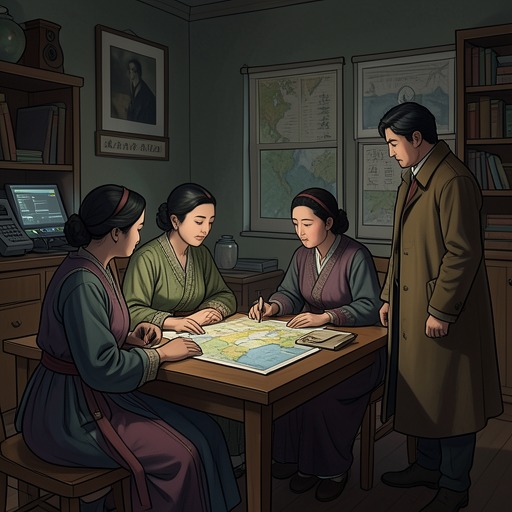
Women TalkingOna Friesen, Agata Friesen’s eldest daughter, becomes a leading thinker in the women’s deliberations about whether to remain in Molotschna Colony, resist, or leave. Her own circumstances make the debate immediate: she is pregnant after an assault, is stigmatized for Narfa, and faces the prospect that her unborn child will be raised by another family. Yet the novel presents her not as a problem for others to solve, but as a person who helps define what safety, faith, and responsibility should mean for the group.
Identity and position
Ona is the eldest daughter of Agata and the elder sister of Salome Friesen. The colony’s elders treat her Narfa as evidence that she cannot reason and conclude that she is beyond redemption. That judgment sits in stark contrast to her conduct in the meetings: she repeatedly asks the women to clarify what they are trying to achieve, tests the religious assumptions behind their choices, and proposes a plan that reaches beyond immediate escape. Her presence exposes the distance between the authority the elders claim and the reasoning Ona demonstrates.
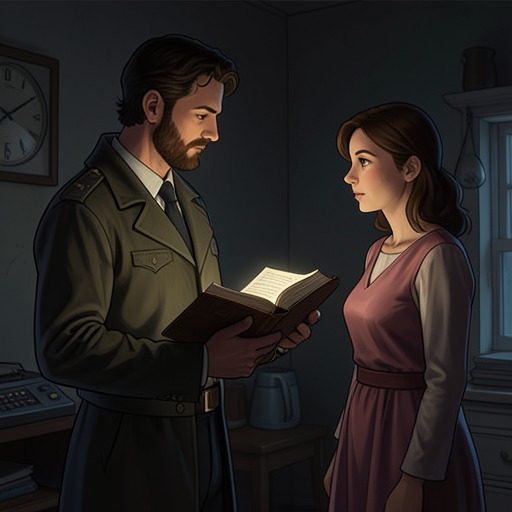
August Epp, who records the meetings, is deeply attached to Ona. Her laughter gives him courage, and he agrees to take the minutes because he would do anything for her. That attachment shapes his account, but the meetings also show Ona as an independent participant whose questions direct the group’s thinking. August asks why the women need a written record if they cannot read it; the question points to a larger constraint on their access to knowledge, while Ona’s work in the discussions makes clear that limited literacy has not limited her capacity to analyze or lead.
Pregnancy, stigma, and constrained choices
During the meetings, Ona keeps an empty feed pail beside her because pregnancy makes her nauseated. When her pregnancy becomes apparent, some colonists hurriedly attempt to arrange a marriage between her and Julius Penner, the son of Ondrej Penner. Ona refuses that proposed solution. She believes Julius deserves better than a woman marked by Narfa and fears that marrying her, because she is not a virgin, would implicate him in sin. The elders’ response is to declare her incapable of reasoning, converting a stigmatized identity into a reason to dismiss her judgment.
The consequences extend to her unborn child. The elders plan for the baby, described in their euphemistic language as the child of an unwelcome visitor, to be raised by another colony family, perhaps even the visitor’s family. This prospect gives Ona’s arguments about protecting children particular weight. Her pregnancy is not simply an individual circumstance: it reveals how decisions about women’s bodies, reputation, marriage, and children are being made around her, while she remains a clear-sighted voice in deciding what the women themselves should do.
Forgiveness, pacifism, and the case for leaving
Ona challenges the idea that a parent can be required to forgive violence against a child. She asks whether forgiveness compelled by religious pressure is genuine, and whether pretending to forgive while still feeling hurt may itself be a moral wrong. Her argument allows for a responsibility that belongs to God alone when a parent cannot forgive. It opens a distinction between faith and compliance with other people’s demands in its name.
Later, Ona argues that forgiveness has no meaning if it is not heartfelt. The women should protect their souls and seek, in their own time and from a distance, the possibility of understanding and compassion—even if the men never ask for forgiveness or continue to deny wrongdoing. She does not present love as a reason to remain exposed to danger. Agata develops Ona’s point into an argument for leaving: distance may make forgiveness and perspective possible without requiring continued proximity. Ona accepts this direction as movement rather than fighting.
This reasoning gives the proposed departure a religious basis. Agata argues that staying would risk drawing the women into violence and conflict with Mennonite pacifism; Ona’s distinction between sincere forgiveness and forced words helps explain why leaving may better preserve their faith. In a further challenge to male authority, Salome argues that women cannot verify what the Bible says when they have not been taught to read it, and that their supposed obligation to submit to husbands is conveyed through husbands’ own interpretations. Ona’s participation belongs to this broader effort to assess religious duty rather than accept male interpretations as unquestionable.
Children, community, and the women’s plan
Ona proposes that the women identify what they are fighting for before listing the advantages and disadvantages of resistance. She suggests developing a manifesto that sets out the conditions they would want after victory, as well as the actions needed to create them. Her focus is not only on what must end, but on what a safer community would require. The proposal recalls Agata’s long-standing practice of working on revolutionary statements, a connection August recognizes in the meeting.
The fate of children remains central to the plan. Salome and Mejal Loewen question why boys aged thirteen and fourteen cannot accompany the women when younger boys may join them and fifteen-year-old boys are already with the men. August answers that adolescents of that age can cause harm but are still children who can be taught. His account of patient guidance and education supports the women’s discussion of whether boys can learn different ways of being male. Ona’s wider emphasis on children’s safety makes room for both protection and the possibility of change, rather than treating the young as beyond influence.
Agata later describes the mothers’ decision to influence their sons as an instinct joined to intellect and faith. In the departure preparations, the women also confront individual exceptions: Cornelius will stay because his mother belongs to the Do Nothing group and he cannot leave without her. Mariche warns that once the men return, women will not be allowed to go. These conditions underscore the urgency and limits of the plan; the account establishes the women’s preparations and resolve, not a completed departure.
Narrative significance
Ona’s importance lies in the way she links intimate vulnerability to collective deliberation. Her pregnancy and the judgment attached to Narfa expose the costs of the colony’s gendered rules, while her questions give the women language for distinguishing faith from submission, forgiveness from compulsion, and safety from retaliation. She proposes both a destination in principle—a community shaped by a manifesto—and a method of thought: define the good the women seek, not only the harm they oppose. August’s devotion frames his record of her, but Ona’s arguments give her a force in the meetings that is her own.